Smells of the Fram Museum
The Fram Museum, located in Oslo, Norway, is named after the most famous wooden polar vessel in the world. This museum of polar exploration tells the story of various explorers and ships that travelled to the North and South poles on scientific adventures. The museum houses the wooden ships Fram and Gjøa. For those interested in the particularities of polar exploration, this museum is a must-see.
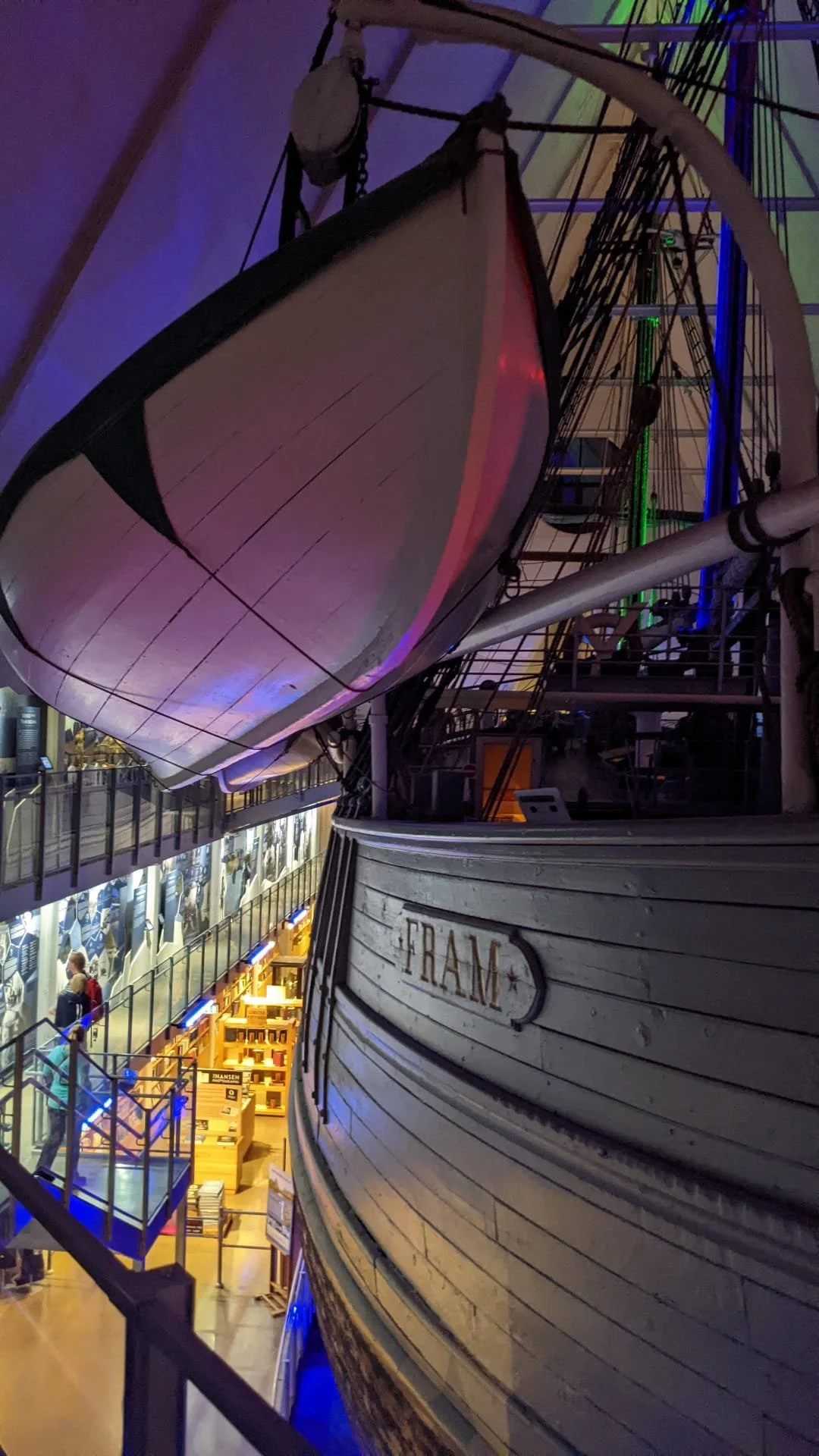
I visited the Fram Museum in September of 2024 and was surprised to see that the museum uses smells, sounds, and textures to tell the story of life onboard the wooden vessel. Visitors use ladders and staircases to climb on board the ship, and one can travel up and down the various passages and spaces of the ship. Throughout the exhibition, signs and screens tell the story of the ship, its history and its memorable passengers.
To give visitors an embodied experience of life aboard such a vessel, the museum turns to the senses. As soon as you enter the wooden ship, you can feel how uneven the main deck is. Just walking across the main deck, one can sense the slopping of the old wooden floors, and one must walk carefully so as not to trip. Standing on the top deck, I could smell the ocean, feel an “ocean breeze”, and hear the sounds of ice and water. The scent diffused smelled fresh, salty, and refreshing. Walking on this uneven surface while hearing the sound of ice breaking apart made me feel like I was truly on the Fram, voyaging through the North Pole’s frigid waters. The whole experience was so realistic that I immediately felt incredibly dizzy. This sudden “sea sickness” gave me the feeling that the ship was moving, and that I was on unsteady ground.

To escape this bizarre, unstable feeling, I escaped to the bottom floors of the ship. I thought that maybe once I was inside the ship, I wouldn’t feel so dizzy and nauseous. Unfortunately, the feeling continued. Inside the ship, new scents were diffused. In the area that had served as the kitchen for the sailors, I could smell what I would define as “a vegetable soup”. The scent was warm, savory, and vegetal. It made me hungry, but did not settle the nausea I was feeling. I continued down the ship and arrived at the engine room, where pipes and loud machinery were located. This mechanical room of the ship was scented like oil and metal. I could smell something oily and mechanical that made my nausea much worse. The inside of the ship was dark, and this scent was so strong, that I immediately searched for the exit.
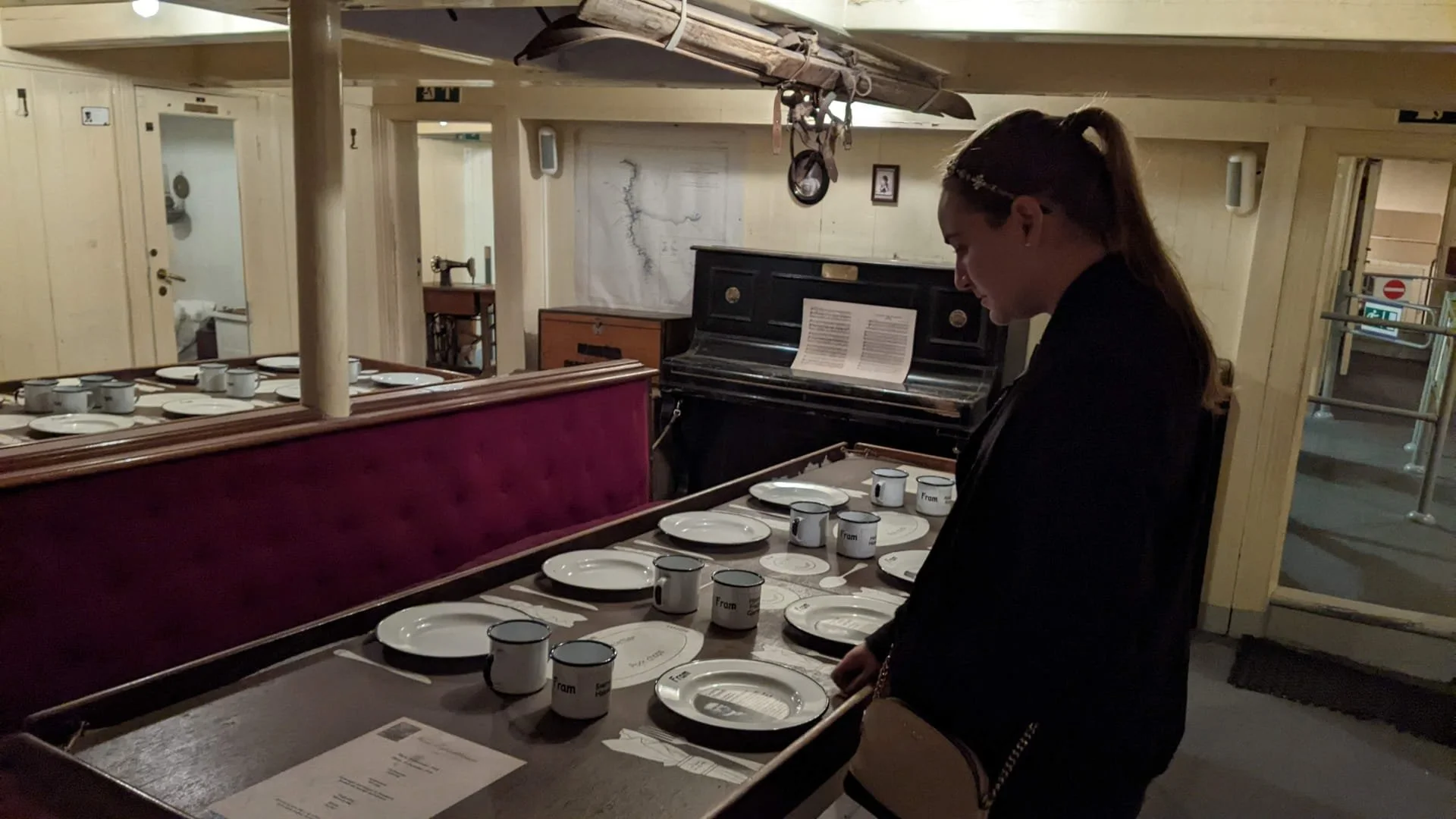
Suffice to say, I did not spend a very long time aboard the Fram. From the uneven wooden surface to the inner oily and loud rooms, I left feeling sick and dizzy. Once I was outside the museum, I was able to breathe in some fresh air and sit down on a bench to enjoy the sunshine. Only then did I begin to feel stable again. Visiting the Fram museum was a very unique experience, but I must say it is not for the faint of heart. The mix of overpowering scents and loud sounds, combined with the slopping and rocky materials made me feel incredibly “seasick” without ever leaving the museum! The museum succeeds in telling the story of life at sea and making visitors feel, quite literally, what it is like to live on a ship.
While the Fram is a beautiful and awe-inspiring museum, I am not certain that the use of the senses in this space succeeds. I found that the chosen smells and sounds were too intense, impeding my ability to learn and spend time in the museum. Instead of slowly moving through the Fram, I felt like I had to rush through the exhibits and quickly exit the space. Overall, I think visitors should be warned about the potential for a “seasick” museum visit, and that the museum designers should consider removing some of the scents and sounds, so as not to overwhelm visitors.